

The Glaze Studio Safety Checklist: 10 Habits Before You Mix or Spray
Ten practical glaze-room habits covering respirators, ventilation, container labeling and wet cleanup that keep silica and spray mist out of your lungs and off your bench.
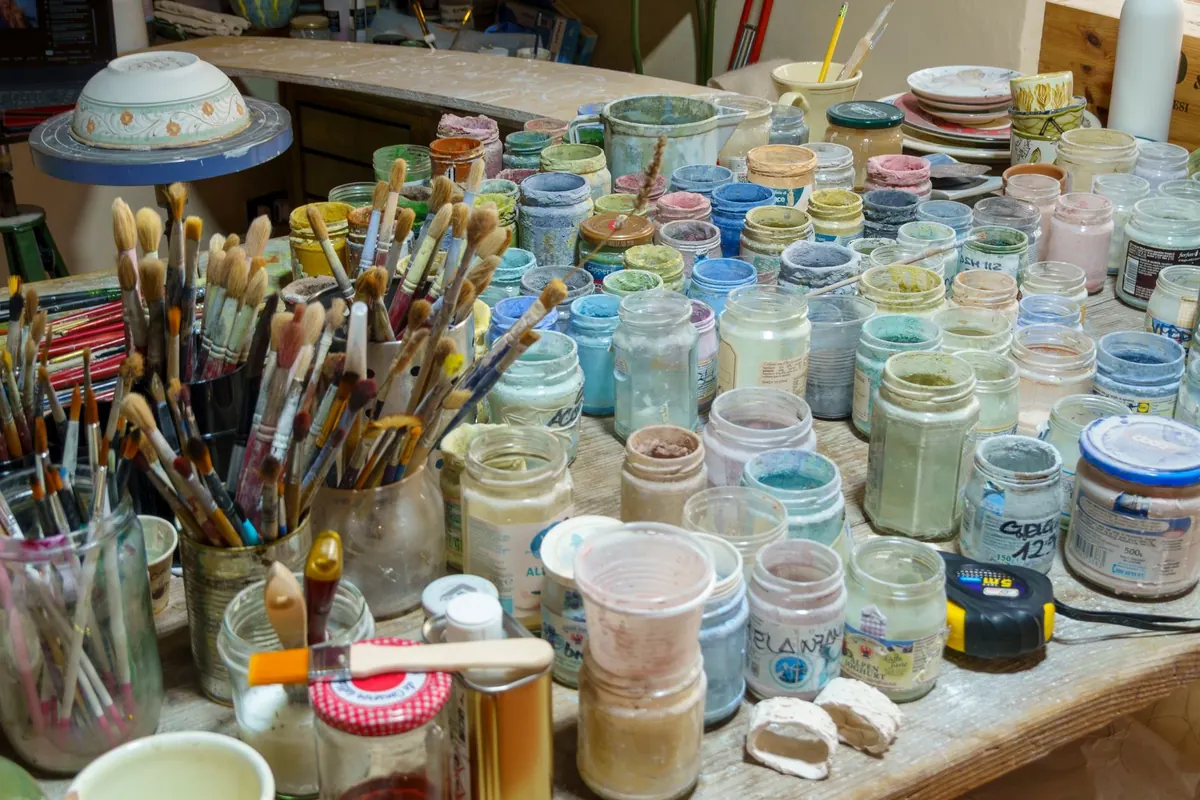
Glaze rooms get a relaxed reputation. Buckets with handwriting on the side, one scoop everybody borrows, a spray gun that coughs twice and goes quiet. It looks like a workspace, and it usually behaves like one — until you notice the fine grey film on the shelf above the sieves.
The materials in that room are the most concentrated things in the studio: silica, frits, colourants, metal oxides, powders that behave like smoke the moment a bag is opened. The harm they can do is rarely immediate, which is exactly why habits matter more than good intentions. Nobody notices the afternoon they inhaled too much. The risk accumulates across hundreds of ordinary afternoons. What follows are the ten habits that survive in real studios — small, crowded, shared by three people and a dog.
Start With What You Wear
Habit 1 — Dress for the dust, not the weather
Long sleeves, long trousers, closed shoes, and an apron that lives in the studio and never goes home in the same bag as your lunch. A watch strap, a ring, or a rolled-up cuff will hold powder against your skin for hours. Tie your hair back. Keep a spare shirt on a hook by the door for the days you're only popping in to check a bucket — those are the days you end up sieving anyway.
Habit 2 — Check the respirator every single time
For dry work — weighing, sieving, pouring powder — you need a properly fitted particulate respirator, not a paper dust mask from the hardware shop. For spraying, a cartridge respirator with particulate filters. Whichever you use, do a seal check before you start: both hands over the filters, breathe out gently, and feel for leaks around the nose and cheeks. Facial hair under the seal defeats the whole exercise. Store the mask in a sealed bag, not on a hook above the sieve where it quietly fills with dust, and replace filters on a schedule rather than when you remember.
Habit 3 — Gloves and glasses, matched to the job
- Nitrile gloves for wet glazes and dipping — thin kitchen gloves tear and let slip past.
- Goggles, not just glasses, for pouring from height and for anything involving a spray gun.
- Long gloves and a waterproof apron if you're dipping pieces by hand up to the elbow.
Rings and bracelets come off before gloves go on, or you'll tear them and give up on gloves entirely.
Deal With the Air Before You Open a Bag
Habit 4 — Prove the ventilation works, don't assume
An open window is not ventilation, and a fan that moves air around the room is not extraction. Before the first bag opens, confirm the extractor is running, the filter isn't choked, and air is actually moving away from your face. In a spray booth, that means the filter is seated, the fan is on, and the door is closed behind you. A simple check: hold a strip of tissue near the intake and watch it pull. If it hangs limp, stop and fix the airflow. Mixing in a draught that carries dust across the studio is worse than mixing in a corner with a lid on.
Habit 5 — Add powder to water, never water to powder
Measure the water into the bucket first, then sift the powder in slowly and let it slake. You'll breathe far less, and the glaze will mix more evenly. Keep lids on buckets between uses, including the one you're "just about to use". Clean up with a damp cloth or a mop — never a dry broom, never compressed air, and never the airline your neighbour uses for their plaster moulds. A spray bottle of water on the bench settles dust before you wipe it.
Labels and Containers Do More Work Than You Think
Habit 6 — Label the bucket before it's full
An unlabelled bucket is a hazard with a handle. Write on the side with a marker that survives water, and add a card under the lid with the recipe code, the date mixed, the specific gravity, and your initials. Note anything a visitor or a new studio mate ought to know: contains silica, do not spray, test tile inside. A glaze you can't identify is a glaze nobody dares use, so it sits there for two years and eventually gets poured down the sink by someone else.
Habit 7 — Keep containers in their lane
No food containers, no drinks cans, no unwashed jam jars, however tempting the size. Glaze scoops stay with their own bucket; a scoop that travels between a cobalt glaze and a clear one is a contamination problem twice over. Keep the spray area on a tray or sheet you can wipe down, store heavy bags on low shelves rather than at shoulder height, and keep powders away from the wheel, the wedging table, and anywhere anyone eats.
Set Up the Spray Session Properly
Habit 8 — Prepare the booth and yourself before the first pass
Mask on before you walk in, not once you're standing at the turntable. Pieces placed and spaced, turntable free, gun tested with water, booth running. Spray low and angled toward the filter, keep your head out of the plume, and step back between coats to let the air clear rather than leaning in to inspect the surface. Stop when the overspray is visible in the air — that's the sign you're working too fast or the extraction is struggling. No drinking, eating, or scrolling in the booth, and no carrying a phone out of it without a wipe.
Cleanup Counts as Part of the Job
Habit 9 — Clean wet, clean wide, clean now
Twenty minutes with a damp cloth at the end of a session beats an hour of dry sweeping at the end of the month. Wipe the bench, the booth walls, the shelf edges, and the outside of every bucket. Mop the floor rather than sweeping it. Rinse tools and hands in a settling bucket, not the sink, and let the sediment settle before you deal with the water. Change spray booth filters when they load up, not when they tear.
Habit 10 — Close the loop at the door
Wash hands and forearms before you leave the room, not just before lunch. Keep work clothes separate from household laundry, and shake nothing out in the house. Restock gloves and masks while you still remember, jot what you mixed in the studio log, and put the marker back where the next person will find it. These are two-minute jobs, and they're the difference between a studio that ages well and one that quietly wears everybody down.
A Two-Minute Ritual Before You Mix or Spray
- Apron on, sleeves down, hair back, jewellery off.
- Respirator seal checked, gloves and goggles within reach.
- Extraction running, filter clean, tissue test passing.
- Water in the bucket before powder leaves the bag.
- Label and log card ready, marker in hand.
- Bench cleared of drinks, phones, and anything you'd rather not dust.
None of this is complicated, and none of it requires a purpose-built lab. It requires the ritual to happen in the same order every time, so that a rushed afternoon still looks like a careful one. If you ever have a health concern — a persistent cough, irritated skin, tightness after spraying — speak to a doctor and take the names of your materials with you. General good practice in the studio is a sensible baseline, not a substitute for professional advice about your own health.
Photo: tommy picone / Pexels